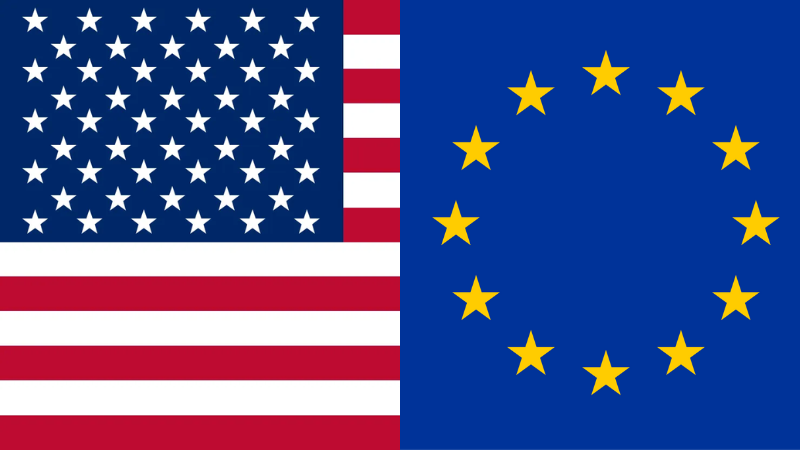
U.S. President Donald Trump escalated tensions with Europe this week by announcing new tariffs on eight NATO allies in response to their opposition to his effort to acquire Greenland. Beginning February 1st, Trump stated that a 10% tariff would apply to exports from Denmark, Norway, Sweden, France, Germany, the U.K., the Netherlands, and Finland, increasing to 25% on June 1st if the United States does not secure the island.
In a letter to Norwegian Prime Minister Jonas Gahr Store, Trump emphasized that the United States needs “Complete and Total Control of Greenland” to counter perceived threats from China and Russia. He asserted that Denmark cannot adequately protect the territory and framed U.S. acquisition as essential for national and global security.
Follow us on X. Follow us on Instagram. Follow us on Facebook.
European leaders quickly mobilized in response. European Council President Antonio Costa called the situation significant, highlighting the bloc’s “readiness to defend ourselves against any form of coercion.” European Commission President Ursula von der Leyen noted that tariffs “would undermine transatlantic relations and risk a dangerous downward spiral.” United Kingdom Prime Minister Keir Starmer stressed that Greenland’s future “is a matter for the Greenlanders and the Danes” and criticized economic pressure as a means to resolve differences among allies.
NYC Council Speaker Julie Menin Unveils Five-Point Plan to Combat Antisemitism
Greenland, a self-governing territory of Denmark, has been strategically important for decades. The United States has maintained a military presence since World War II, and previous administrations, including Harry S. Truman’s in 1946, sought to purchase the island, but Denmark refused. The territory’s Arctic location, military significance, and mineral resources have continued to draw American interest. EDC Data Shows 8,400 NYC Businesses Closed Amid Congestion Pricing Tolls
In response to Trump’s tariffs, French President Emmanuel Macron requested the activation of the EU’s Anti-Coercion Instrument, or “trade bazooka,” allowing measures such as retaliatory tariffs and restrictions on U.S. businesses to protect European sovereignty. EU officials warned that escalating tensions could jeopardize both security cooperation and economic stability across the transatlantic alliance.
For more metro, national, and international news stories, visit newyorkvoicenews.com.