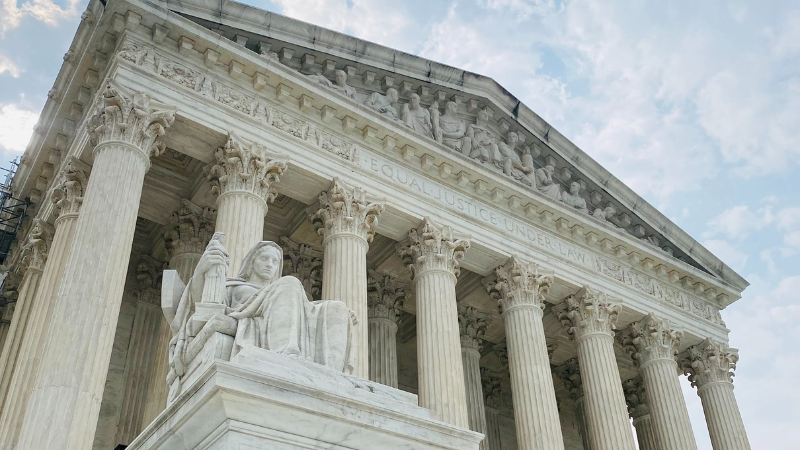
The Supreme Court took up a high-profile case Wednesday examining President Donald Trump’s executive order seeking to end birthright citizenship for children born in the United States to parents who are in the country illegally or temporarily. Trump attended the proceedings, marking the first time a sitting president has observed oral arguments at the nation’s highest court.
Trump Signs Executive Order on Mail-In Voting and Federal Voter Lists
Solicitor General John Sauer, representing the administration, argued that the 14th Amendment’s Citizenship Clause has been misinterpreted to grant automatic citizenship to children of people in the country illegally. He maintained that the clause “did not grant citizenship to the children of temporary visitors or illegal aliens who have no such allegiance,” emphasizing that it was designed to confer citizenship on formerly enslaved Black people and their descendants. Sauer cited historical examples and international practices, noting that the U.S. is “an outlier among modern nations” in offering unrestricted birthright citizenship.
Follow us on X. Follow us on Instagram. Follow us on Facebook.
ACLU Legal Director Cecillia Wang, defending the current interpretation, stressed the longstanding principle of jus soli, rooted in English common law. She remarked, “Virtually everyone born on U.S. soil is subject to its jurisdiction and is a citizen,” highlighting the 1898 Wong Kim Ark ruling, which she said establishes that parental domicile does not restrict citizenship. Wang added that attempts to limit birthright citizenship would affect more than 250,000 children annually and undermine the constitutional guarantee enshrined in the 14th Amendment.
Retired NYPD Officer Faces Bribery Charges in Investigation of City Migrant Shelter Contracts
Justices pressed both sides on practical and legal concerns, including the definition of domicile, the scope of allegiance, and the implications of birth tourism. Chief Justice John Roberts described the administration’s examples as “very quirky,” while Justice Ketanji Brown Jackson questioned the feasibility of determining citizenship at birth. Justice Samuel Alito raised humanitarian considerations, noting that some immigrants may establish permanent ties despite being subject to removal.
The court is expected to issue a decision by the end of June, a ruling that could have far-reaching consequences for immigration policy and the legal status of U.S.-born children of noncitizen parents.
For more metro, national, and international news stories, visit newyorkvoicenews.com.