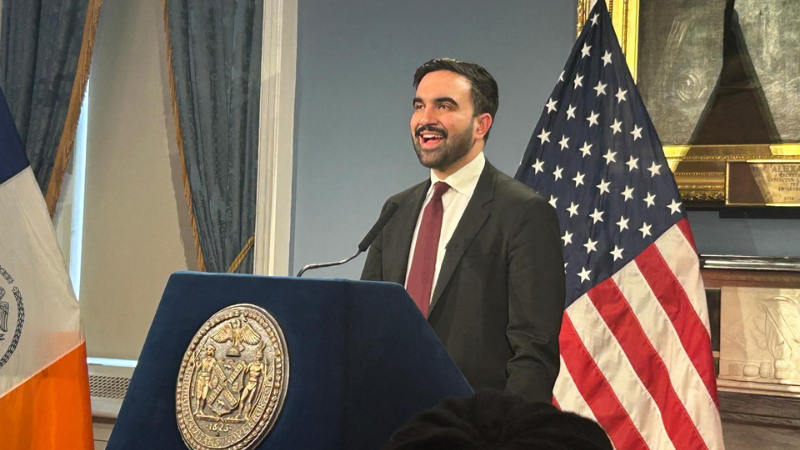
New York City Mayor Zohran Mamdani unveiled New York City’s Fiscal Year 2027 preliminary budget on February 17th, highlighting a projected $5.4 billion gap over the next two fiscal years and outlining two potential paths to address it. The first path calls for Governor Kathy Hochul to raise taxes on the city’s wealthiest residents and most profitable corporations, as only the state can enact those measures. If Hochul does not increase taxes on the wealthy, Mamdani has indicated he would pursue the second path, raising property taxes on small residential and commercial property owners. Observers noted that this approach would disproportionately affect working- and middle-class New Yorkers, particularly Black and Brown homeowners, who would bear the largest share of the impact.
Mayor Mamdani Appoints Ana María Archila as NYC International Affairs Commissioner
The $127 billion budget proposal includes $1.77 billion in projected savings from city agencies through the designation of Chief Savings Officers, as mandated by Executive Order 12. These officers are tasked with identifying recurring efficiencies, and agency-wide savings are expected to yield roughly 1.5 percent of spending this fiscal year and 2.5 percent next year. The budget also factors in $7.3 billion in updated tax revenue, alongside $1.5 billion in state support from Governor Hochul and an additional $97 million in Foundation Aid.
Absent new revenue authority from Albany, the administration would need to rely on a 9.5 percent property tax increase, projected to generate $3.7 billion in FY 2027, along with $980 million from the city’s Rainy Day Fund and $229 million from the Retiree Health Benefits Trust. City officials noted these measures would provide the legal framework for a balanced budget, though Mamdani emphasized their use as a measure of last resort.
Follow us on X. Follow us on Instagram. Follow us on Facebook.
The proposed property tax increase drew immediate concern from elected officials across the city. Council Member Althea V. Stevens stated, “Black homeowners already face rising costs, including insurance premiums, maintenance expenses, and inflation-driven increases in everyday necessities. Adding financial burden without clear safeguards could force families to make impossible choices, including leaving the neighborhoods and the city they helped build.”
Queens Borough President Donovan Richards added, “The impacts on Black and Brown communities! We talked a lot about how the affordability agenda would impact everyone – this is absolutely a nonstarter for me.”
Speaker Julie Menin and Finance Chair Linda Lee emphasized, “At a time when New Yorkers are already grappling with an affordability crisis, dipping into rainy day reserves and proposing significant property tax increases should not be on the table whatsoever. The Council believes there are additional areas of savings and revenue that deserve careful scrutiny before increasing the burden on small property owners and neighborhood small businesses, which could worsen the affordability crisis.”
Rev. Jesse Jackson, Civil Rights Leader and Two-Time Presidential Candidate, Passes Away at 84
Staten Island Assemblyman Sam Pirozzolo, who is leading the campaign for Staten Island to secede from New York City, commented, “The mayor campaigned on affordability and equity. Overall, a tax increase does not address either. What we need is equity. When Former Mayor Bill DeBlasio’s multi-million dollar brownstones are taxed less than some Staten Island homes, there is an obvious problem. Let’s fix the problem.”
Comptroller Mark Levine remarked, “Raising property taxes would be no one’s preferred option, partly because the system is so flawed, riddled with inequality. It’s essentially a regressive tax as it’s currently structured, hitting homeowners and communities of color much more than it hits homeowners in wealthier areas. So, this should not be anyone’s choice of how we solve this, nor, by the way, should draw down reserves.”
Trump Administration Ends Temporary Protected Status for Yemen with 60 Day Departure
Council Member Phil Wong stated, “Property tax hikes are a nonstarter. In one of the highest taxed cities and states in the country, we cannot keep asking families to pay more instead of auditing programs that don’t serve New Yorkers, ending wasteful no bid contracts, and bringing real discipline to spending.”
Council Member Natasha Williams added, “To advance a tax increase without first addressing that inequity feels deeply tone-deaf to Black, Brown, and working-class homeowners like the families I represent in Southeast Queens who are already shouldering a disproportionate share of the property tax burden.”
Mamdani’s budget also includes targeted investments totaling $576 million over two fiscal years, covering snow removal, warming centers, new mobile health units, expanded legal staff to reduce tort liability, and increased funding for food assistance programs. Additionally, the five-year capital plan allocates $662 million in FY 2027 to modernize more than 3,200 affordable housing units and $48.2 million to renovate Bellevue’s Adult Comprehensive Psychiatric Emergency Program.
The proposal will undergo review by the City Council, Borough Presidents, and the Independent Budget Office, with the Council’s formal response expected by April 1st.
For more metro, national, and international news stories, visit newyorkvoicenews.com.