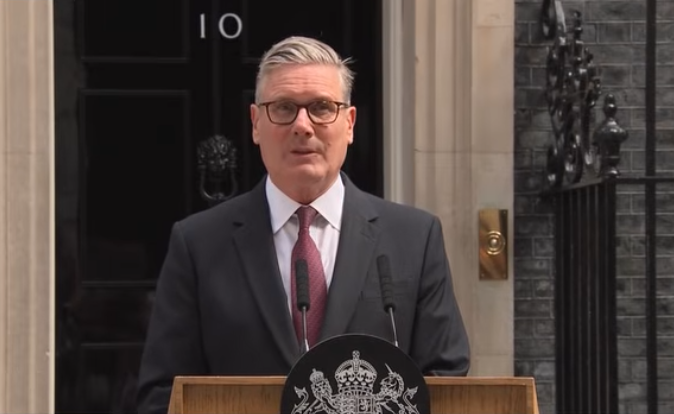
British Prime Minister Keir Starmer announced his resignation today marking a sudden end to a tenure that began with a sweeping Labour election victory less than two years ago.
Speaking outside 10 Downing Street, Starmer said, “Every decision I’ve taken has been about putting the country I love first. That is why I will resign as leader of the Labour Party.”
Explaining next steps, he said, “I will ask the National Executive Committee of the Labour Party to set out a timetable with nominations opening on the 9th of July and completed by the summer recess. In the case of a contest, this will ensure a new leader is in place before Parliament returns in September. I will remain in post as prime minister until the contest is complete. And I will do everything I can to ensure an orderly handover of power.”
The resignation comes after months of growing pressure within Labour. Falling poll numbers, disappointing local election results, and concerns about the party’s future electoral prospects had fueled criticism from within its own ranks. Some Labour lawmakers argued that a change in leadership was necessary as the party faced increasingly tough political competition.
Attention is now shifting to the race to succeed Starmer. Andy Burnham, the former mayor of Greater Manchester and a recently elected Member of Parliament, has emerged as one of the leading names in the conversation.
Even as he announced his departure, Starmer stood by his record in office. He pointed to his government’s efforts to strengthen the economy, improve public services, and bring greater political stability after years of uncertainty.
Labour is expected to launch its leadership contest in the coming weeks, with a new leader potentially in place before Parliament returns in September.